
The most searched beaches in Malta — Golden Bay, Mellieha Bay, the Blue Lagoon — are spectacular. They’re also packed. What most visitors never find are the spots that locals have been quietly keeping for themselves: natural pools with zero tourists, rocky coves that require a bit of effort to reach, and hidden beaches that don’t appear on any tourist map. This guide covers all of them — honestly, with real directions and zero tourist board spin.
Why Malta’s Hidden Beaches Beat the Famous Ones
Malta’s 137km of coastline is mostly limestone cliffs and rocky inlets — and that’s exactly what creates the hidden beaches in Malta that locals love. The geology that limits sandy beaches also carves out dramatic natural pools, secret gorges, and sheltered coves that are genuinely spectacular and genuinely empty. The effort required to reach them — a car, a walk, sometimes a scramble — is exactly what keeps the crowds away.
The best quiet beaches in Malta have one thing in common: slightly inconvenient access. Learn that formula and you’ve unlocked a completely different Malta from what most tourists see.
Ghar Lapsi — The Best Hidden Cove in Malta
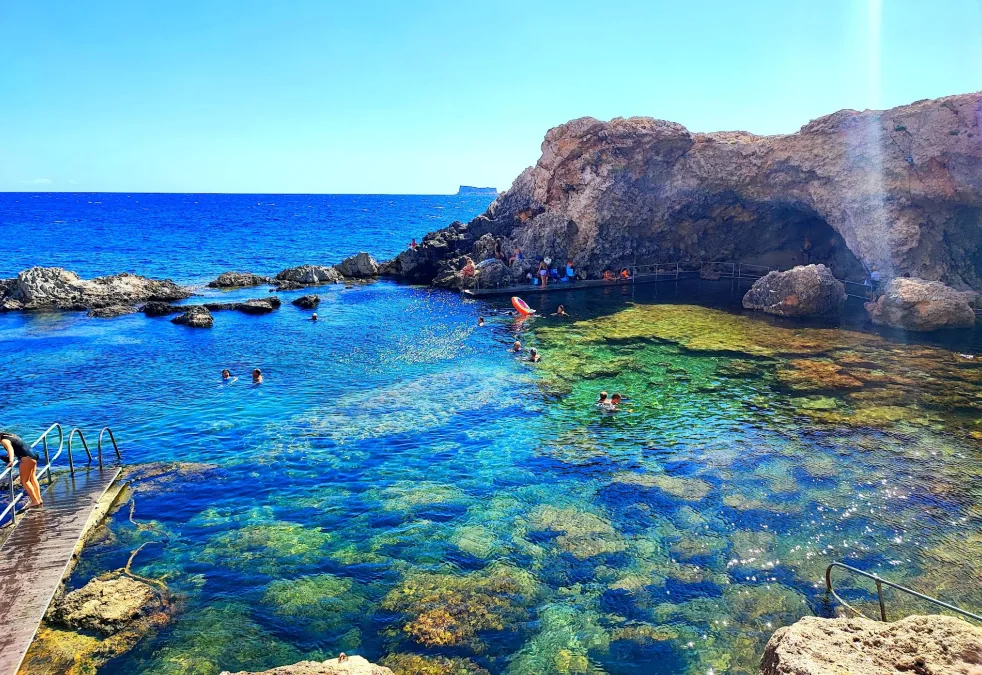
Ghar Lapsi is the closest thing Malta has to a local secret that’s genuinely accessible. A small rocky cove on the southwest coast near the village of Siġġiewi — “Għar Lapsi” translates to “Lapsi Cave,” named for the small cave at the back of the inlet. What makes Ghar Lapsi special: the water clarity is extraordinary even by Maltese standards, the diving and snorkelling are world-class, there are actual restaurants right above the cove, and despite all this, it stays remarkably uncrowded compared to the main tourist beaches.
Ghar Lapsi, Malta, sits below the Dingli Cliffs on the island’s southwest corner — the most dramatic and least-developed stretch of coastline on the main island. Most tourists never get here because it’s not on the standard bus routes for most of the year and doesn’t feature prominently in guidebooks. Which is exactly the point.
What to Do at Ghar Lapsi
- Swimming — The natural pool formed by the rocky cove is calm and sheltered even on windy days. The western concrete platform is the easiest entry point for non-experienced swimmers. Water clarity regularly exceeds 20 metres.
- Snorkelling — Ghar Lapsi snorkeling is some of the best on the island. The rocky seabed, small caves, and posidonia seagrass beds create exceptional marine life diversity. Expect to see schools of damselfish, wrasse, moray eels, and octopus. Bring your own gear — there are no rentals at the cove.
- Diving — The Ghar Lapsi dive site is one of Malta’s best shore dives. Depths range from 6m to 40m, offering a network of swim-throughs and tunnels with visibility spanning 20-30m. It is suitable for all experience levels, and multiple local dive schools offer guided dives here.
- Cliff jumping — The limestone platforms create natural jump spots. Always check the depth before jumping, and never jump when a swell is running.
- Cave exploring — The cave at the back of the inlet is the star of the show. It is shallow enough to swim through, with beautiful light filtering in from above.
- Kayaking — Ghar Lapsi is the launch point for the Dingli Cliffs kayak route — one of Malta’s most dramatic coastal paddles. The cliffs rise 250 metres above the sea directly north of the cove.
Ghar Lapsi Restaurants
One of Ghar Lapsi Malta’s greatest advantages over most hidden spots is the food. The iconic, family-run Ta’ Rita Lapsi View Bar & Restaurant (established in the 1930s to serve fresh rabbit to Royal British Marines) and Dive In sit directly above the cove. They serve fresh seafood caught locally. Grilled octopus, fried calamari, spaghetti alle vongole — all good, all reasonably priced by Maltese standards. Book in advance for dinner, especially on weekends. Having a restaurant 50 metres from a hidden cove is a rare combination.
How to Get to Ghar Lapsi, Malta
- Car: Strongly recommended. From Valletta, it takes approximately 30 minutes via Rabat (Mdina) and Siġġiewi. Follow signs to Siġġiewi, then Ghar Lapsi. Free parking is available directly above the cove.
- Bus (Summer 2025/2026 Update): During the summer months (starting June 1st), Route 109 connects directly to Ghar Lapsi. Outside of the summer timetable, take the bus to Siġġiewi village, then walk approximately 25 minutes (1.8km) to the cove. Ask locally for directions, as signage is minimal.
Honest Review — Ghar Lapsi
This is the best hidden cove in Malta for snorkelling and diving. It’s less dramatic visually than St. Peter’s Pool or Wied il-Ghasri, but far more practical — it has proper restaurants, calm sheltered water, and a genuinely stunning cave entrance. It gets busy on summer weekends but rarely feels overwhelming. Come early in the morning or late in the afternoon for the best experience. The Ghar Lapsi dive site is genuinely world-class — if you dive, don’t miss it.
Best for: Snorkellers, divers, families, and anyone who wants an authentic Malta experience without the tourist circus.
Avoid: Strong south winds — the swell comes straight into the cove.
Gnejna Bay — The Northwest’s Forgotten Sandy Beach
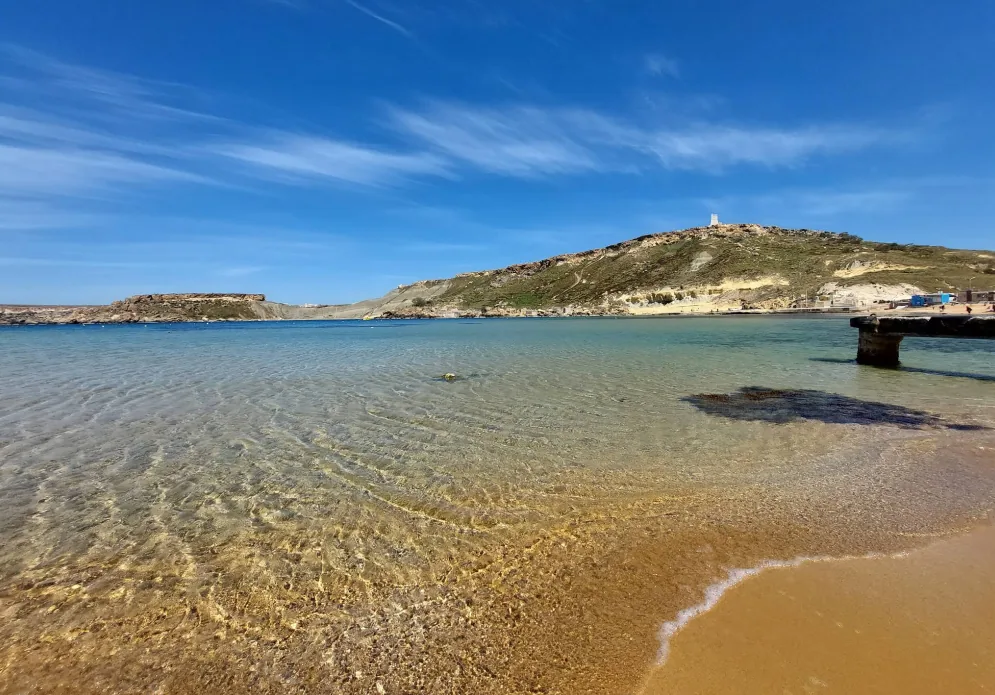
Gnejna Bay sits just south of Golden Bay and Ghajn Tuffieha on the northwest coast — close enough to those famous beaches to share the same parking area, yet consistently less crowded than either. Gnejna Bay, Malta, is a small sandy beach with a local atmosphere that feels much closer to how Maltese people actually spend summer weekends compared to the tourist hotspots nearby.
What Gnejna Bay has that its famous neighbours don’t: a more authentic local vibe, boat storage, small fishing huts along the shore, and the dramatic Ta’ Marija sea cave just around the headland — accessible by kayak or swimming.
Key Facts — Gnejna Bay
- Sandy beach — smaller than Golden Bay, but features genuine sand.
- Kiosks for drinks and snacks are open in the summer.
- Excellent kayaking — the sea caves around the headland are spectacular.
- A car is strongly recommended due to limited public transport.
- The Gnejna Bay beach in Malta gets busy with local families on summer weekends but rarely with tourists.
Best for: Those who want a sandy beach + local atmosphere + fewer tourists.
Combine with: Golden Bay and Ghajn Tuffieha — all are within 15 minutes of each other.
Slugs Bay Mellieha — The Secret Cove Under the Radar
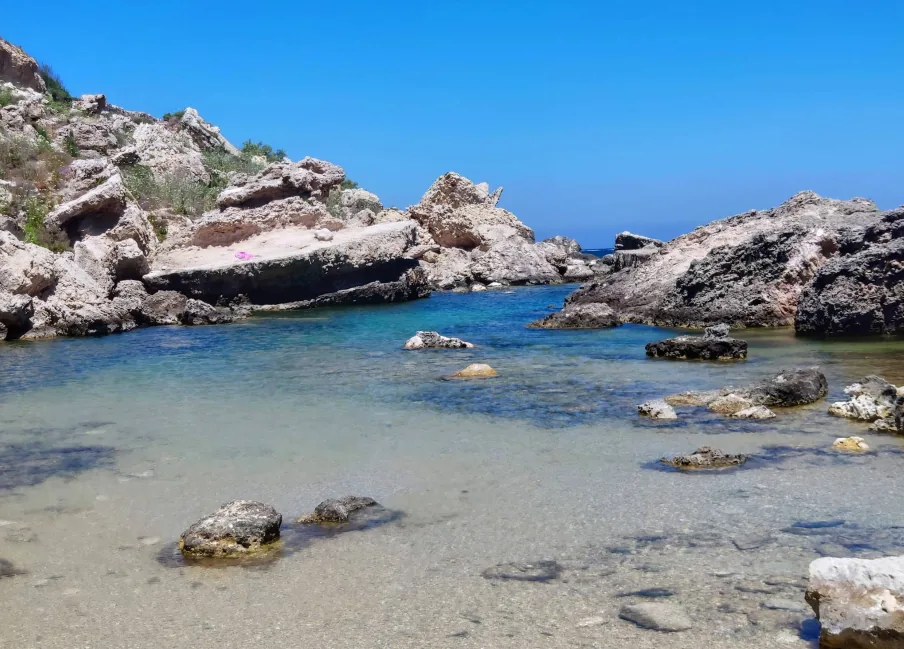
Slugs Bay, Mellieha, is one of those spots that barely shows up in any tourist guide — which is exactly why it’s worth knowing about. It is a small rocky cove near Mellieha in the north of Malta, tucked safely below the main road. The name is more memorable than flattering — in Maltese, it’s known as Il-Qlejgħa — but the water and the scenery are anything but sluggish.
Slugs Bay, Malta, has the kind of access situation that keeps it quiet: you need to know it exists, and the path down requires a bit of agility. Once you’re there, it’s typically far less crowded than the main Mellieha beaches, despite being just minutes away. Expect clear water, rocky platforms, and good snorkelling. There are zero facilities, so bring everything you need.
Key Facts — Slugs Bay
- Rocky cove — no sand; features natural limestone platforms.
- Excellent snorkelling and crystal-clear water.
- No facilities whatsoever — bring your own water, food, and snorkel gear.
- Car recommended — it is just a few minutes from central Mellieha.
- The main draw: it is almost always quiet, despite its proximity to Mellieha Bay.
Best for: Snorkellers, those wanting a quiet swim near Mellieha, and anyone seeking a “locals-in-the-know” experience.
Combine with: Mellieha Bay (10 min away) for a full North Malta beach day.
Fomm ir-Rih — Malta’s Most Remote Beach (Access Update)
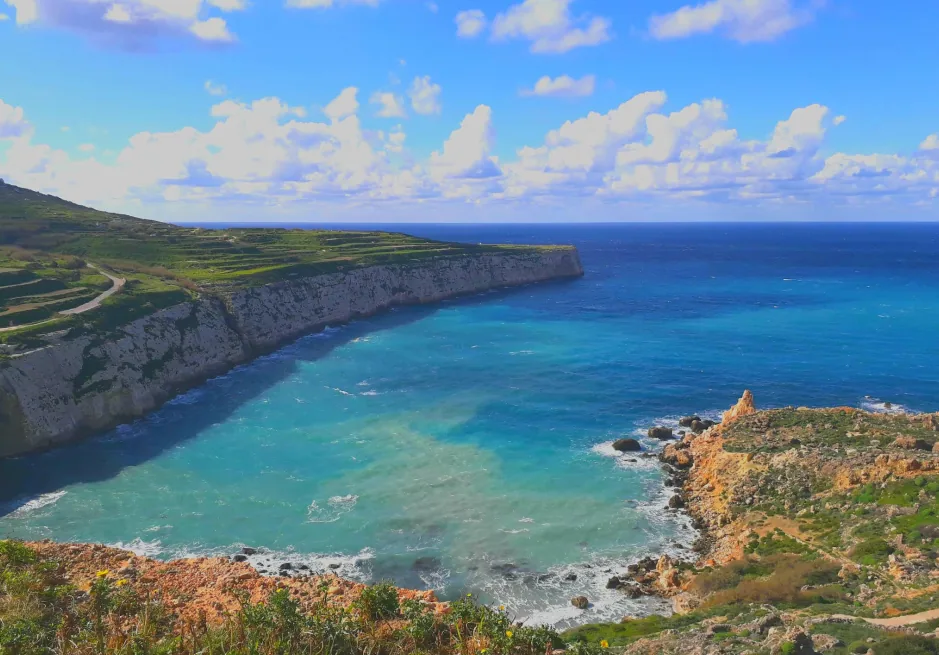
Fomm ir-Rih — meaning “Mouth of the Wind” — is Malta’s most remote and dramatic pebble cove at the base of towering limestone cliffs. There are no facilities, no crowds, and the coastline feels completely undiscovered.
⚠️ 2025/2026 Access Update: In the past, visitors used a steep and treacherous path from the village of Baħrija to hike down to the bay. However, land access has recently become heavily restricted and the path closed due to safety and private property disputes. Today, the absolute best (and most reliable) way to experience Fomm ir-Rih is by renting a kayak from nearby Gnejna Bay and paddling around the cliffs.
Key Facts — Fomm ir-Rih
- Pebble beach — no sand.
- Zero facilities — bring absolutely everything, including more water than you think you’ll need.
- Access: Kayaking from Gnejna Bay is highly recommended as the foot path is currently closed/restricted.
- It is also accessible by boat from Ghar Lapsi, which offers a dramatic approach.
Best for: Kayakers, adventure seekers, and those who want Malta completely to themselves.
Coral Lagoon — The Natural Wonder Near Mellieha
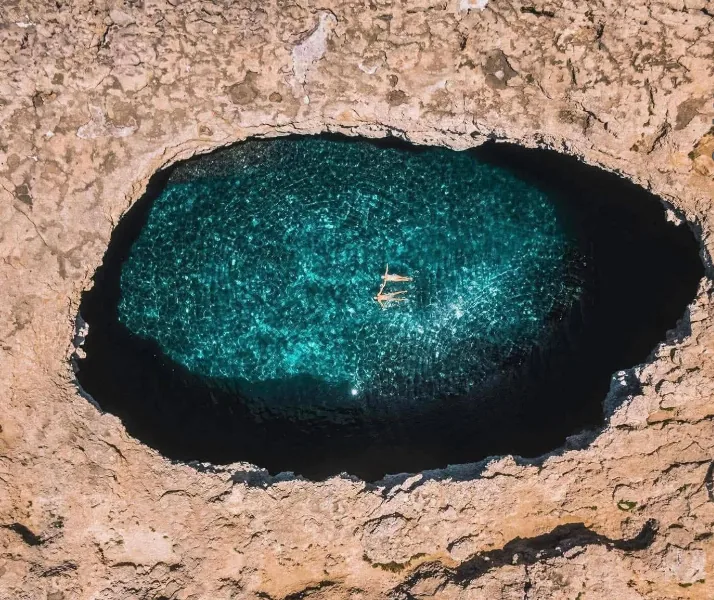
Coral Lagoon is a collapsed sea cave near Mellieha in the north of Malta — a circular natural pool of turquoise water accessed through a narrow entrance in the limestone. It’s only accessible by kayak, paddleboard, or swimming from the sea, which is precisely what keeps it so special. The interior is calm, sheltered, and genuinely otherworldly: aqua-coloured water set in a natural amphitheatre of white limestone.
It’s not a beach in any traditional sense, but as a hidden swimming spot, it’s one of the most unique in the archipelago. Most visitors to Mellieha Bay drive straight past without even knowing it exists.
Key Facts — Coral Lagoon
- Only accessible by kayak, paddleboard, or swimming from the sea — there is no land access.
- Best approached from Armier Bay or via a guided kayak tour from Mellieha Bay.
- Morning visits provide the best light inside the lagoon.
- Zero facilities — bring everything you need on your kayak.
Best for: Kayakers, paddleboarders, and those who’ve already ticked off the main tourist spots.
Wied il-Ghasri — Gozo’s Secret Gorge
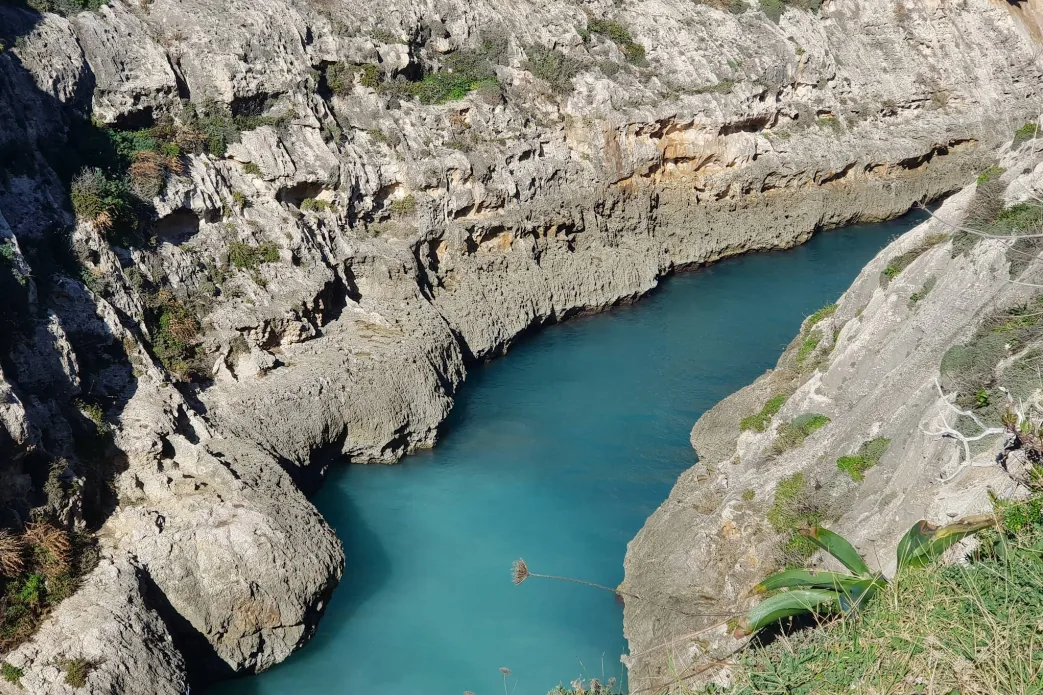
Already covered in our full Gozo beaches guide, but well worth mentioning here: Wied il-Ghasri, on Gozo’s north-west coast, is the most dramatic hidden swimming spot in the whole archipelago. A narrow gorge carved through the limestone opens onto the sea, boasting clear water, extraordinary colours, and an almost always quiet atmosphere since most tourists never find it.
Kalanka Bay — St. Peter’s Pool’s Quieter Twin
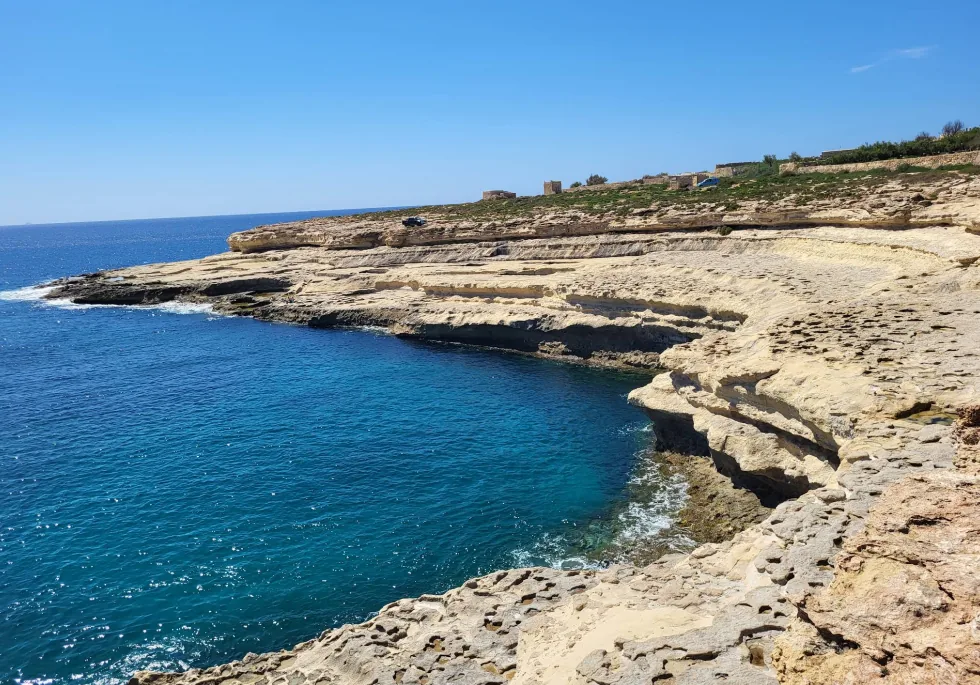
Already covered in our St. Peter’s Pool guide, Kalanka Bay is a 15-20 minute walk south along the rocky coast from St. Peter’s Pool and is almost always empty, even when the main pool is busy.
Hidden Beaches Malta — Quick Comparison
| Spot | Type | Access | Best for | Facilities |
|---|---|---|---|---|
| Ghar Lapsi | Rocky cove | 🟢 Easy (Car / Summer Bus) | Diving, snorkelling | 🟢 Restaurants |
| Gnejna Bay | Sandy beach | 🟢 Easy (Car) | Local vibe, sand | 🟡 Kiosks |
| Slugs Bay | Rocky cove | 🟠 Moderate | Quiet swim, snorkelling | 🔴 None |
| Fomm ir-Rih | Pebble beach | 🔴 Hard (Kayak from Gnejna) | Adventure, total isolation | 🔴 None |
| Coral Lagoon | Natural pool | 🔴 Kayak/boat only | Kayakers, unique experience | 🔴 None |
| Wied il-Ghasri | Rocky gorge | 🟠 Moderate (Gozo) | Best snorkelling in Malta | 🔴 None |
Practical Tips — Hidden Beaches & Secret Coves Malta
- Car is essential — Most spots in this guide are either impossible or impractical to reach by public transport (except Ghar Lapsi in summer). Rent a car for the days you want to explore beyond the main tourist beaches.
- Bring everything — Hidden beaches in Malta have limited or zero facilities. Pack water (more than you think you need), food, sun protection, water shoes, and snorkel gear if relevant.
- Morning visits — Even the secret spots get busy on summer weekend afternoons. Arriving before 9 AM at Ghar Lapsi or Gnejna Bay gives you a completely different experience.
- Check conditions — Exposed coves like Fomm ir-Rih and Ghar Lapsi become dangerous in south winds. Always check the forecast before committing to a drive.
- Water shoes — Essential at every rocky spot. These are non-negotiable.
- No facilities = leave no trace — Bring a bag for rubbish. These spots stay beautiful because locals maintain them that way.
FAQ — Secret Coves & Hidden Beaches Malta
What is the best hidden beach in Malta?
Ghar Lapsi, Malta, is the top choice for its combination of accessibility, water quality, excellent snorkelling, and nearby restaurants. Fomm ir-Rih takes the crown for total isolation and dramatic scenery. Gnejna Bay is perfect for a sandy beach without the massive tourist crowds, while Slugs Bay in Mellieha offers a quiet swim right near a popular tourist area.
How do I get to Ghar Lapsi?
Ghar Lapsi, Malta, is about 30 minutes by car from Valletta via Rabat and Siġġiewi. Follow the signs to Siġġiewi village, then look for signs pointing to Ghar Lapsi. There is free parking directly above the cove. In the summer months, bus route 109 connects directly to the cove. Outside of summer, take the bus to Siġġiewi village, followed by an approximate 25-minute walk.
Is Ghar Lapsi good for snorkelling?
Yes — Ghar Lapsi snorkeling is among the best in Malta. Expect exceptional water clarity (20+ metres visibility), rich marine life, and small caves and swim-throughs. Bring your own gear as there is no rental on-site. The Ghar Lapsi dive site is also ranked as one of Malta’s top shore dives for experienced divers.
What is Gnejna Bay like?
Gnejna Bay, Malta, is a small sandy beach on the northwest coast, situated between Golden Bay and Ghajn Tuffieha. It’s much less touristy than its neighbours and boasts more of a local vibe, with boat storage and fishing huts giving it a unique character. The sea caves around the Gnejna Bay beach headland are accessible by kayak. A car is recommended for getting there.
What is Slugs Bay in Mellieha?
Slugs Bay in Mellieha (known as Il-Qlejgħa in Maltese) is a small rocky cove with incredibly clear water and excellent snorkelling. It is almost always less crowded than nearby Mellieha Bay, despite being just minutes away. There are no facilities, so you must bring everything you need. Slugs Bay, Malta, is one of those special spots that rewards the effort of finding it.
Can I visit these spots without a car?
For Ghar Lapsi, it’s possible to take bus 109 in the summer or a bus to Siġġiewi followed by a 25-minute walk. However, everything else in this guide generally requires a car or a kayak. Renting a car for 1-2 days specifically to explore the hidden beaches in Malta is one of the best investments you can make during your trip.